

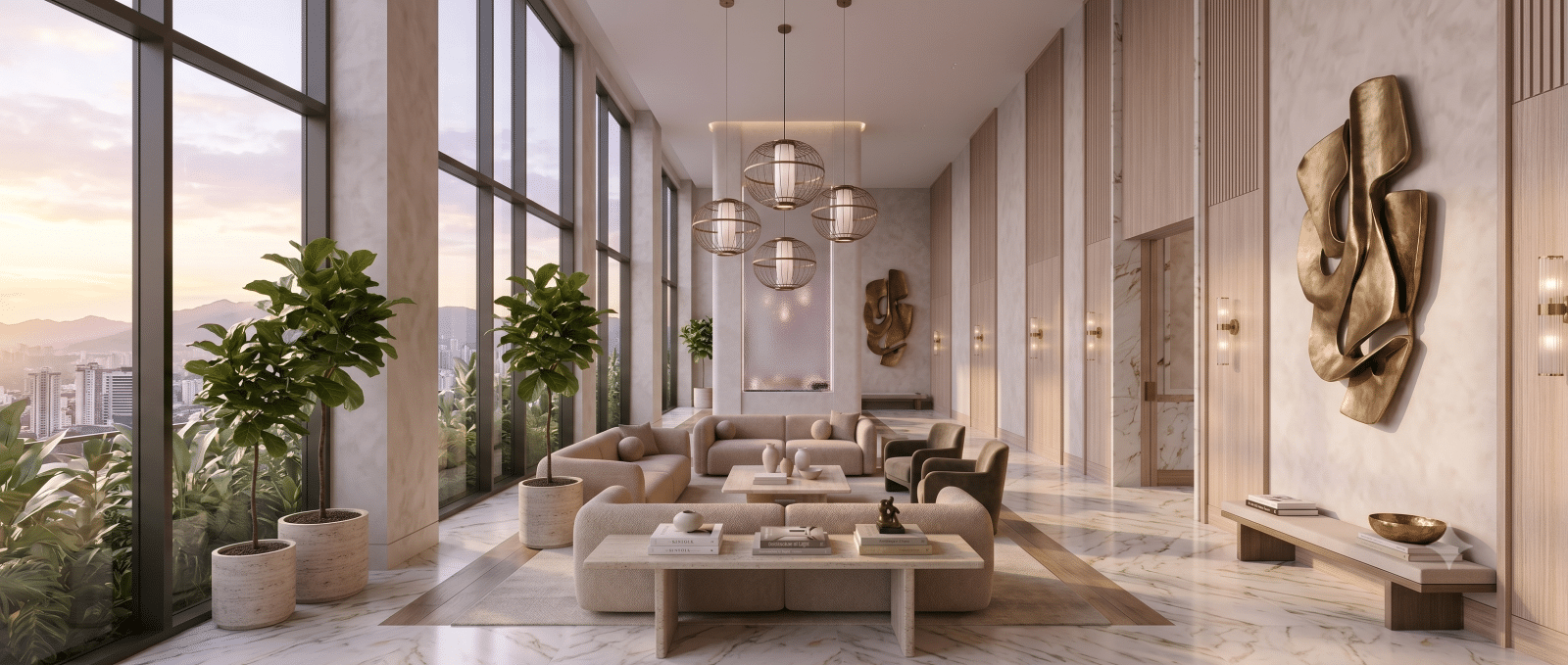
In the Luxury Hospitality sector, lighting is no longer just a technical requirement for lux levels and efficiency; it is a silent financial asset. Transitioning from functional to emotional lighting transforms the guest experience, extends dwell time in common areas, and directly boosts ratings on digital platforms.
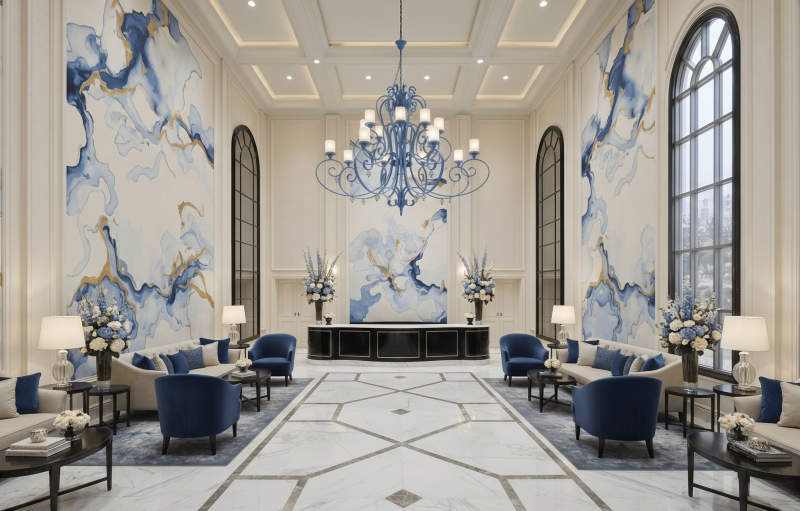
1. The Lobby: Invisible Zoning and Orientation
The lobby dictates the traveler’s first cognitive impression. To reduce travel stress, emotional lighting replaces uniform overhead lighting with luminescent islands:
-
Reception as a Beacon: A subtly higher but diffuse and warm lighting (2200 – 2700K) guides the guest flow intuitively.
-
Lounge Areas as Refuges: Contemporary floor lamps or table lamps with blown-glass shades create a high-end domestic atmosphere that invites relaxation.
-
Impact on Reviews: A lobby with smooth lighting transitions generates reviews that highlight “an immediate oasis of calm upon entering.”
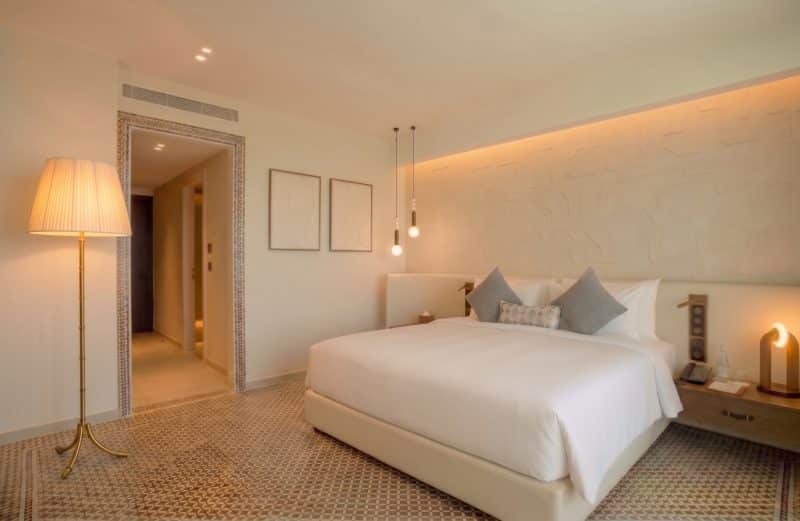
2. The Suite: Circadian Rhythms and Intimacy
Comfort in the guestroom requires lighting scenography that respects the guest’s rest through automated transitions:
-
Indirect Perimeter Lighting: High color-rendering LED strips (CRI > 95) in coves or headboards prevent direct glare.
-
Decorative Accent Light: Bespoke pieces next to an armchair define a micro-space for disconnection.
-
The Bathroom-Spa: Diffuse frontal light on the mirror to avoid harsh shadows, paired with a low-level night courtesy light.
Conclusion: The Return on Lighting Investment
Even the finest material loses its value under improper lighting. Investing in lighting design is not an aesthetic extra; it is a brand strategy: we don’t manufacture lamps, we design the atmosphere where guest memories are made.
Are you conceptualizing your next hospitality project?